Purpose Fulfilled or Prayer Answered? Angelic Appearance to Zechariah

The story of the birth of Christ should be reflected upon this season with these thoughts entwined in the Christian mind…   If God is not sovereign in His purpose, what is the point of praying?

And there appeared to him an angel of the Lord standing on the right side of the altar of incense.  And Zechariah was troubled when he saw him, and fear fell upon him.  But the angel said to him, “Do not be afraid, Zechariah, for your prayer has been heard, and your wife Elizabeth will bear you a son, and you shall call his name John.”

Lk. 1:11 – 13 ESV

It is a perennial question, often expressed as a puzzle; sometimes, a challenge to argue: If God is sovereign in His purpose, what is the point of praying?  For those untrained in theology, or without fundamental knowledge of the Scriptures, there seems to be no escape from the conundrum.  Let this episode of the appearance of the Angel Gabriel to Zechariah give the answer of simple faith.

Zechariah and Elizabeth are introduced in Luke’s Nativity narrative as “righteous in God’s sight” (1:6), but are childless.  As one may expect of the righteous, they make this a matter of prayer.  Zechariah is also a priest.  At a time for him to exercise his priestly function in the Holy Place of the temple, there appears to him the angel Gabriel.  He tells the astonished Zechariah a news that is just too much for the man to hear.  His wife Elizabeth will conceive and bear a son!  This son is, of course, the Gospels’ John the Baptist.  Peeling off, for the moment, many other lessons in this encounter, just focus on what the angel tells Zechariah.  This is happening, the angel explains, “for your prayer has been heard.”  Here are the two sides of the paradox clearly entwined with no sense of contradiction.

Is It God’s Purpose Fulfilled?

No doubt, it is.  For there are prophecies in the Old Testament concerning the coming of John the Baptist.  He fulfills Isaiah’s prophecy of “a voice cries in the wilderness, prepare the way of the Lord” (Isa 40:3).  Luke’s narrative cites this very prophecy as having been fulfilled (Lk 3:2 – 6).  This is corroborated by Mark 1:2 – 5 and John 1:23.  Besides this prophecy, the coming of Elijah is cited by no less than Jesus as being fulfilled in John the Baptist (Matt 17:11ff), a reference to the prophecy of Malachi 4:5, 6. 

We must conclude from this that the birth of John the Baptist is part of God’s redemptive plan.  Therefore it was conceived in eternity, and prophesied many generations before the event.  The purpose of God is fulfilled.  It reveals the sovereignty of God, and that His redemption plan is never going to fail – not in its preparation (from the Old Testament until John the Baptist), and not in its inauguration and consummation (the First Coming and the Second Coming of Christ). 

Is It Man’s Prayer Answered?

Without ambiguity from the Angel Gabriel, it is.  There can be no falsehood in those words, “for your prayer has been heard.”  Should we see contradiction?  That can only be the conclusion of one already prejudiced against the truth.  But for one who will follow as the Word of God leads, no matter where, will see the blessed paradox – two sides of the truth entwined.  The God who ordains the event is not slack in the arrangement of means – including the prayers of His people. 

It is important across the board in many areas of Christian duty.  Has God chosen those He will save?  There is no doubt, based on the Scriptures, that He has.  But He has also appointed the means – evangelism; intercession; etc.  One may not be irresponsible in the means and have any reason to expect that God will save the elect through him.  So with matters of prayer.  What we pray for, when according to the will of God, we may rest secure is heard and answered by God.  That answer is not a change in the mind of God, but the confirmation of His purpose.  Nothing comes to pass that is not according to His will (Eph 1:11).  But for the good of His people, we may also affirm that prayers are truly heard by God.  Praying is not a game of make-believe.  Things really happen in answer to prayers.  The story of the birth of Christ should be reflected upon this season with these thoughts entwined in the Christian mind.

Indeed, we may reverse the challenge with which we begin:  If God is not sovereign in His purpose, what is the point of praying?

Overturned Favor; Overruled Error: Herod the Great and the Magi

We must not think of people who are in error to be hopeless in discovering Christ. That unless they get their knowledge from the Scriptures, there is no way to find Christ. Or even for some, unless they are solidly Calvinistic or Reformed, they are as good as damned! Thankfully, the mercy of God is greater than our prejudices. The Magi found Christ. Their error was overruled. That is the sovereign mercy of God.

We must not think of people who are in error to be hopeless in discovering Christ.  That unless they get their knowledge from the Scriptures, there is no way to find Christ.  Or even for some, unless they are solidly Calvinistic or Reformed, they are as good as damned!  Thankfully, the mercy of God is greater than our prejudices.  The Magi found Christ.  Their error was overruled.  That is the sovereign mercy of God.

Only the Gospel of Matthew gives the narrative of the Magi’s visit to the child Jesus (Matt 2:1 – 12).  Necessary corrections: (a) They are not Three Kings (neither three nor kings!); (b) They are nameless (no Gaspar; Balthazzar, and Melchor); (c) They are not among the visitors to the manger to honor the Baby Jesus.  It has been a while since the birth itself.  Herod himself calculated some two years since.  And the narrative says, “going into the house, they saw the child with Mary his mother, and they fell down and worshiped him” (2:11).

The narrative is pregnant with lessons consonant with Matthew’s purpose of presenting the theme of Christ’s kingdom.  Two lessons especially pertain to how people encounter that kingdom claim of Christ in different ways with opposite results.

HEROD THE GREAT – OVERTURNED FAVOR

Herod bore the title of “King of Judea” (Luke 1:5).  He was not a real Jew, though, but an Edomite.  Thus he always felt vulnerable to his hold on power.  While he was  known for his great building projects, this was matched by a great paranoia.  He had some of his own family members killed when he perceived them as threat.  Here was a man who will do anything – even the foulest means – to keep himself in power.

Yet, he was a highly favored man.  The narrative brings this out in his consultation with the Scripture-experts of his court.  When he learned from the Magi of the birth of one who was “King of the Jews,” Herod wasted no time to determine what the Scriptures prophesied concerning this.  Is this not a great favor?  He had the Scriptures as guide, with teachers to tell him how to understand them.  But he used his knowledge, gained from the Scriptures, to make the grim plot of having Jesus killed.  And just to make sure, he had all male children, two years and under, massacred in Bethlehem.  His knowledge of the Scriptures, which should have been a favor, was overturned to his own greater condemnation.  With that knowledge of the Scriptures, he sought to eliminate the Christ.

There are many Herod’s in churches today.  They are taught the Scriptures on a regular basis.  But rather than turning to Jesus for their salvation, the more their hearts are hardened against Him.  What a tragedy to face the judgment saddled with favor overturned!

THE MAGI – OVERRULED ERROR

Who were the Magi?  Some translations have “Wise men.”  Magoi (plural of magos) is used in the OT Septuagint to refer to the magicians in Nebuchadnezzar’s court (Dan 2:2, 10).  In the NT, other than this narrative, the word is only used of Simon the magician (Acts 8:9ff) and of Elymas the sorcerer (Acts 13:8).  Since these Magi in Matthew’s narrative interpreted the star, the best conjecture is that they are probably astrologers.  But whatever range of possibility, they belong to those pagans who were looking for the “King of the Jews” through heavenly signs.  This is forbidden in the Mosaic Law and is indicted by the prophets. 

We can only conclude from this that God, in His sovereign mercy, has overruled providentially the error of the Magi to lead them to Christ.  And when they saw Him, they worshiped Him.  Whether they have turned into true believers is immaterial at this point.  What is not to be missed is the mercy of God.  That mercy can penetrate through the wrappings of error and bring the erring ones to the Lord Jeus Christ. 

We must not think of people who are in error to be hopeless in discovering Christ.  That unless they get their knowledge from the Scriptures, there is no way to find Christ.  Or even for some, unless they are solidly Calvinistic or Reformed, they are as good as damned!  Thankfully, the mercy of God is greater than our prejudices.  The Magi found Christ.  Their error was overruled.  That is the sovereign mercy of God.

CHRIST and HIS KINGDOM

There are attempts to see the star as a natural phenomenon.  Some see Halley’s comet; and others see the conjunction of planets Jupiter and Saturn, the latter can be approximated to about Jesus’ birth-year.  But whether natural phenomenon, or simply a miracle of God (which I favor), Matthew is using this as a pointer to Old Testament prophecy.  He has the Magi call this, after all, “his star when it rose” (or better, “his rising star”).  This is an echo of the prophecy of Balaam (even against his will, but put by God in his mouth): “I see him, but not now; I behold him, but not near: a star shall come out of Jacob, and a scepter shall rise out of Israel” (Num 24:17).

Through his unique narrative of the Magi’s visit, Matthew is presenting the kingdom of Christ.  That Herod failed to kill Jesus proves that His kingdom is indestructible by His enemies.  That the pagan Magi were led to Jesus reveals Matthew’s theme: Subjects of the kingdom of Christ will come from all nations through God’s sovereign mercy.  Thus, the mission that it leaves the Church, Matthew is to give the most familiar version of all: “Make disciples of all the nations” (Matthew 28:19).

PRIDE Month – Indeed!

Yes, to insist on an identity other than male and female is to go against God and His intention for human flourishing.  But there is grace even for those who are deep in that rebellion.  So let Christians be convictional in their rejection of this moral insanity.  But let them be compassionate for even of such is the grace of Jesus Christ.

It is Pride Month.  It is that season of the year when the world celebrates society’s rejection of God’s created binary sexuality of Male and Female.  Do they even need a month for it?  They celebrate it almost everyday!  But no label could have been more apt for such a celebration.  It is PRIDE! 

What else is it when one thinks he/she can sweep aside millennia of wisdom that always thought of humanity as male and female?  What else is it when anyone, against the inflexible reality of his/her biological nature, professes he/she can be the opposite by just the decision of the mind?  And all the world must accept it, nay, celebrate it.  Otherwise, the ever-present threat is to be cancelled.

Of course, that is all they can do.  They will not win in a fair debate where both sides are heard.  If the side of binary conviction is even given a hearing, the LGBTQ position will shrivel in its own self-defeating insanity.  So, they have no choice but to cancel, rather than engage in debate.

But there are now signs that some conservatives are waking to their hidden power.  For after all, reason still triumphs over moral insanity.  When conservatives, in their moral rage, say “Enough is enough!” the moral insanity feels that power.  Take Bud Light and Target.  And just now, Elon Musk endorsed the Matt Walsh documentary, “What is a woman?”  It happened after attempts to suppress it by the vestigial extreme progressives in Twitter.

Christians may share moral rage with conservatives of the political spectrum.  But Christians have more to offer.  In the language of Paul, in listing the unrighteous who will not inherit the kingdom of God, he includes: “nor homosexuals, nor sodomites.”  But he does not end with a note of condemnation, but with the hope of salvation: “And such were some of you. But you were washed, but you were sanctified, but you were justified in the name of the Lord Jesus and by the Spirit of our God.” (1 Cor. 6:9 – 11 NKJ)

Yes, to insist on an identity other than male and female is to go against God and His intention for human flourishing.  But there is grace even for those who are deep in that rebellion.  So let Christians be convictional in their rejection of this moral insanity.  But let them be compassionate for even of such is the grace of Jesus Christ.

Meditation: I thirst!

A pastoral meditation on the saying of Jesus on the Cross: “I thirst!”

The most under-appreciated saying of Jesus on the Cross

The seven sayings of Jesus on the Cross are a commonplace in Holy Week discourses and meditation.  Of these seven sayings, perhaps, it is correct to say that the most familiar is: “Father, forgive them for they do not know what they do.”  It is so easy to appreciate and understand.  The others are also well-known, and easily grasped.  There are two sayings that are more difficult, one is placed as the fourth: “My God!  My God!  Why have you forsaken Me?”  Its difficulty lies in the depth of its mystery – understood only in its sense of substitutionary atonement.  The other saying, placed as the fifth, is difficult for its very simplicity, “I thirst!”

Of course, Jesus was thirsty.  That is, after all, the point of the Cross: to die a slow and agonizing death exacerbated by dehydration under the scorching sun.  Others try to spiritualize, or allegorize, to extract some significance – like Jesus is thirsting for the souls of men.  This attempt is not necessary.  This saying is found only in the Gospel of John.  The physical suffering is thrown into bold relief, but with a deeper sense. 

“After this, Jesus knowing that all things were now accomplished, that the Scripture might be fulfilled, said, I thirst” (John 19:28).

This, indeed, is the saying that reveals more than any of the six, the human pain and suffering that Jesus was undergoing.  But what is to be noted is that He was very much in control even in the utterance of this pain.  It was only after “knowing that all things were now accomplished.”  His words were not of complaint, or it would have been first utterance.  It was only in the knowledge that all were accomplished that He could then, like the human that He was, be vocal of His own pain and suffering.

How in stark difference from the selfishness that often characterizes our own way of bearing suffering!  For many, it is the first consideration.  If a service will entail suffering, retreat becomes the better discretion.  How opposite is Jesus’ attitude: “For the joy that was set before Him, He endured the Cross, despising the shame” (Heb 12:2).  Few are those with the courage like that of Paul: “I do not account my life of any value nor as precious to myself, if only I may finish my course and the ministry that I received from the Lord Jesus, to testify to the gospel of the grace of God” (Acts 20:24).

Not only did Jesus’ saying come after His assurance that all things were accomplished.  The very utterance is, itself, a fulfillment of the Scripture.  One may choose two Old Testament references.  Psalm 22 is a Messianic Psalm of suffering but ending in glory.  V. 15 must be in the mind of Jesus: “my strength is dried up like a potsherd, and my tongue sticks to my jaws; you lay me in the dust of death” (Ps. 22:15).  It is a graphic description of the poignancy of the Messiah’s suffering.  More to the point is another Messianic Psalm in Psalm 69:21, “They gave me poison for food, and for my thirst they gave me sour wine to drink.” With the excessive thirst to represent Jesus’ suffering, there was the insult of men to bear.  But, as Scripture tells us, “When He was reviled, He did not revile in return; when He suffered, He did not threaten, but continued entrusting Himself to Him Who judges rightly.” (1 Peter 2:23).

This is the Lord Jesus in excessive human suffering.  Bear in mind that He suffered for sinners that they may be saved.  But their being saved means that they must serve.  And true service must reckon with suffering for Christ.  “For it has been granted to you that for the sake of Christ you should not only believe in him but also suffer for his sake” (Phil. 1:29).

Remembering these words of Jesus, “I thirst,” we do well to ask, how much am I willing to serve through suffering for Him?

Manger… Cross… Crown

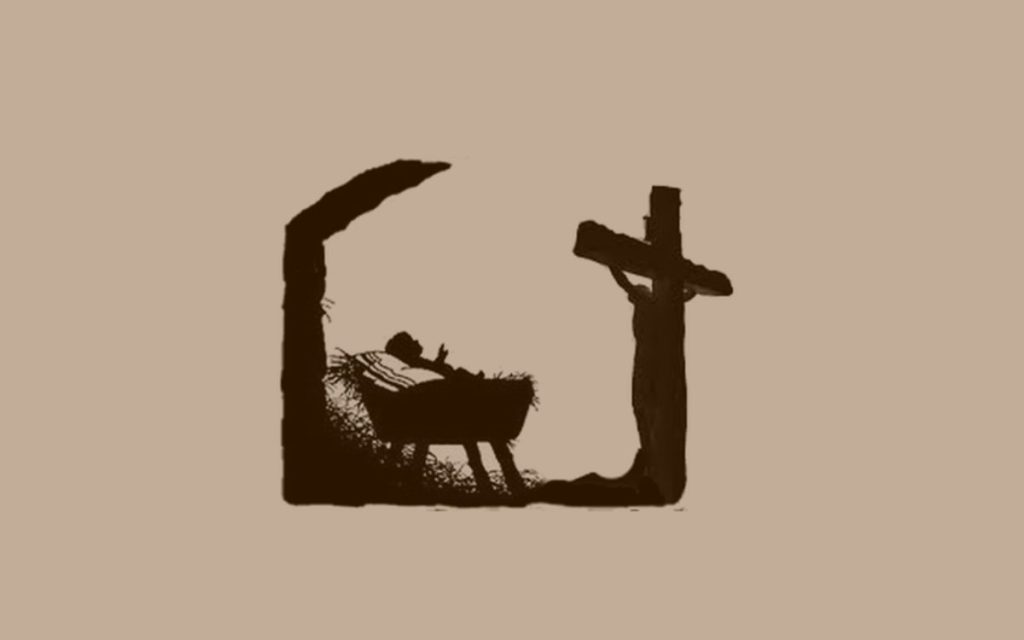
God, the Son, had to become human in order to be a fit Substitute for sinners and take the curse of their sins.  That is why He was born.  The manger is meaningful only because it is meant to lead to the Cross. 

God, the Son, had to become human in order to be a fit Substitute for sinners and take the curse of their sins.  That is why He was born.  The manger is meaningful only because it is meant to lead to the Cross.

Give love on Christmas Day… No greater gift is there than love.  This favorite song usually during this season is made popular by the catching voice of the Jackson Five.  But did you know that not a single line of that song refers to the birth of Christ?  It has a reference to Santa Claus (Every little child on Santa’s knee, has room for your love underneath his tree!), but not to what this season is supposed to be celebrating.  Its give-away message is probably couched in that line: It’s that once of year when the world’s sincere.  It is ironic that it should choose the very character that can never be seasonal – sincerity!

No icon of the Christian story is more fashionable in this season than that of the manger.  The baby Jesus in the manger – so “Christmas is for children.”  Add the wise men (not three kings!) bearing gifts – so it is time for gift-giving.  Lost in all of these is the very reason for the manger.  Lost is the centrality of the Cross.  I suggest that there are two paradigms that relate the manger and the cross – the first is the popular one, and it is wrong; the second is the biblical belief.

The Manger OR the Cross

The way Christmas is celebrated, even when rationalized as remembering the birth of Christ, it misses the significance of that birth.  It is not because the baby in the manger had a halo to distinguish it from other babies.  He had none.  Like other babies, it would be crying and make a mess.  The wonder of the manger is that this is what God became.  The Bible gives that astounding statement: “The Word became flesh” (John 1:14).  It is the Word earlier identified as “In the beginning was the Word, and the Word was with God, and the Word was God.”  New Testament scholar D.A. Carson insightfully calls the Word as both “God’s own Self” and “God’s own Fellow.”  In theology, it is called the Incarnation.  Augustine has this well-known summary: “Remaining what He was, He became what He was not.”

There must be necessity for such a condescension to happen.  The very wonder of that birth is its message of lowliness.  We can only appreciate that lowliness if we accept the biblical teaching of the pre-existent identity of the One born.  He is the eternal God who chose to be human.  The Creator became a creature.  He who made all things chose to be One of whom it was asked: Is this not the carpenter? (Mark 6:3).

For many, the manger has an independent meaning to itself.  When linked with the cross, it is a no-brainer to decide which one is preferred by the world.  Here lies the problem.  Even if we take the manger on its own merit, it challenges us with the humbleness of its character.  This is not like the birth of the crown-heir of the British throne – announced to the world with all the regalia of royal festivity.  It is the birth of the One who “did not count equality with God a thing to be grasped, but humbled himself, by taking the form of a servant” (Philippians 2:6-7).  Think of this when you think again of the manger.  The insight of faith should discover to you the dissonance of the ostentation and materialism characterizing this season with the humiliation (to use the old theological term) of the Son of God.

But the manger cannot be taken as having independent significance.  It has its reason.

The Manger TO the Cross

The New Testament is unambiguously lucid in its teaching on the humanity of Jesus.  Anselm’s medieval query, Cur Deus Homo (literally, “Why a God Human”) has a clear answer. 

As to what His humanity consists, the writer of Hebrews is straightforward: “Therefore he had to be made like his brothers in every respect, so that he might become a merciful and faithful high priest in the service of God, to make propitiation for the sins of the people.” (Hebrews 2:17).  He was human in every way – in all but sin.  The reason given is to make propitiation for the sins of the people.  The word propitiation is one of the effects of sacrifice – in a ceremonial way, it pacified the just wrath of God.  Except that in Jesus, it was not ceremonial.  It was actual, and permanent as once-for-all.  In the simplest form, He needed to be completely human in order that He might suffer the death of sacrifice for the sins of the world.  He was born in the manger, lived a perfect life, and to fulfill the mission of the Cross.  The Manger is not a self-meaningful event.  Its meaning is in preparing the Son of God for the Cross.

Thus Paul asserts: “But when the fullness of time had come, God sent forth his Son, born of woman, born under the law, to redeem those who were under the law, so that we might receive adoption as sons.” (Galatians 4:4-5).  Earlier, in the same context, Paul explains what this redemption involved: “Christ redeemed us from the curse of the Law by becoming a curse for us” (3:13).  God, the Son, had to become human in order to be a fit Substitute for sinners and take the curse of their sins.  That is why He was born.  The manger is meaningful only because it is meant to lead to the Cross. 

Thus, the New Testament Church is given an institution of sacraments that will remember the death and resurrection of Christ.  While one may recognize the liberty of those who wish to celebrate the manger, it is not biblically mandated.  Celebrating the death of Christ is mandated through baptism and the Lord’s Supper.

The Empty Tomb TO the Crown

The death of Christ led to His burial.  As He promised, on the third Day He rose from the dead, and left for His disciples nothing but an empty tomb for them to witness.  Through His resurrection, and later Ascension, He gave fulfillment to the long-awaited promise of the Son of David who will fill the throne and reign in a kingdom that will have no end.  This has already began.  As Peter declares in the first post-resurrection sermon on Pentecost, Jesus has fulfilled the Davidic covenant promise of being seated on His throne (Acts 2:30ff).

This is the real celebration of believers.  It happens not seasonally every last month of the year.  It is being done every Lord’s Day when the Church assembles for worship.  It is remembered in an especial way when a believer is baptized, and when the community shares the emblems of bread and fruit of the vine – to commune with the body and blood of the Lord Jesus Christ. 

But yes, let us also celebrate the manger befitting its lowliness.  Let us be amazed at the incarnation of the Son of God.  But let us always bear in mind that it all led to the real turning-point event of redemptive history, and even of world history – the Cross of our now-crowned Lord Jesus Christ!  Glory to Him!

Do not Pray for the Dead; But Prepare for Death

Thoughts for this day of remembering the dead

Should we pray for the dead?

“Please pray for the repose of his soul.”  This is a very common request that one reads in scores of obituaries that are published every day.  Accompanying that request may be a scheduled mass, or novena, for the deceased.  Behind this is the practice of praying for the dead.  This, of course, is rooted in the belief that, through prayers for the dead, there can be change in the course of the soul of the dead loved one.  If this is a valid hope, nothing can be more loving than to spend time praying for the departed.

Is there a basis for this hope in the Word of God?  The Roman Catholic Church, chief proponent of this practice, admits that this practice is linked with its notion of purgatory.  In the Roman Catholic Encyclopedia entry in “Prayers for the Dead,” it asserts: “Catholic teaching regarding prayers for the dead is bound up inseparably with the doctrine of purgatory and the more general doctrine of the communion of the saints, which is an article of the Apostle’s Creed.”  The practice of praying for the dead, by this assertion, stands or falls on the validity of the doctrine of purgatory. 

This is not the place to refute this belief in a purgatory.  Suffice it to say that this is what drove the Reformation of the 16th century which led to the division of Catholics and Protestants.  Catholic clerics used this doctrine to swindle the superstitious population of precious money on promise that the souls of their loved ones will spring from purgatory once the money rings on the coffer.

The Catholic doctrine of and practice of prayer for the dead is built on the sinking sand of lack of assurance.  This is contrary to the assurance of the gospel and salvation that saving faith brings about.  Lack of assurance is the fruit of salvation by human merit and works.  Whereas assurance grows out of the certainty of the saving work of Christ received by faith.  “Therefore He is also able to save to the uttermost those who come to God through Him, since He always lives to make intercession for them” (Heb. 7:25 NKJ).  Salvation is not contingent on human works, but guaranteed by what Christ has accomplished.

The Bible teaches that death is the final closure of moral opportunity.  The time to be saved is now.  If salvation is not received now, there is no post-mortem salvation opportunity.  “It is appointed to men to die once, and after this, the judgment” (Hebrews 9:27).

Prepare for a good death

The Puritans make a different emphasis that believers should be doing.  That is to prepare to die in a way that is glorifying to God.  This is, unfortunately, a well-nigh absent note.  It may be generally because we do not want to discuss such an unpleasant subject as death – even among Christians.  There is so much more amusement in life, that some are loathed to think of abandoning this in death.  This is unrealistic.

No matter how silent we may be about dying, and studiously avoid its mention, we will still die.  It is still the one appointment with providence that we cannot avoid.  For the Puritans, the way to prepare for death is not only that one is assured of his salvation.  It is, in the language of Paul, “with all boldness, as always, so now also Christ will be magnified in my body, whether by life or by death” (Phil. 1:20 NKJ).

Richard Baxter wrote the classic Dying Thoughts at a time that he was sick, and thought that he was dying.  The Lord spared him then, but he bequeathed to the Church an immortal plea for believers not only to be sure of heaven.  It is imperative that when we are close to death, we have a life and testimony that will point the living to the Lord we have served faithfully in our lives. 

Will the Lord be magnified in our dying?

Baptist Day?  I am a Baptist, but why I believe Baptists should reject this

This is a Baptist pastor’s reflection on the law mandating a Baptist Day.

It must be made clear that this position is not borne of any lack of zeal for the Christian cause and mission.  On the contrary.  It is borne of conviction that, for the Christian cause, the Church is to source it in the only Power it should seek.  And it is not in the sword.  It is in Heaven’s power available to the Church through the Word and Prayer.  Indeed, it must be said that the present evangelical intoxication with politics explains much of the powerlessness of the institutional church.

Just before the conclusion of the 18th Congress of the Philippines, it managed to get a legislation passed declaring every second Thursday of January as “Baptist Day.”  As expected, the measure was met with celebration by many Baptists in the country.  One enthused, “I thought I would never live to see this day!”  It is taken as a great victory that government could pass a law in support of Baptists.  Why would any Baptist be against it?  I am a Baptist, and I am against this idea.  I have a Baptist reason – which a good Baptist must always draw from the Scriptures.  There is also the light of history.

Religious Freedom – Baptist Distinctive

A legislated Baptist Day violates one Baptist distinctive, namely, religious freedom.  Religious freedom is not only the liberty of citizens to adopt their religious beliefs and affiliation.  It is that, but Baptists have carried this further by underscoring the separation of Church and state.  This means that one jurisdiction (state) should have no interference with the jurisdiction of the other (church).  When the Founding Fathers of America were considering the building of their nation, they initially thought of recognizing a state church, patterned after much of nations in Europe, especially their colonial mother nation of England.  The first choice was the Baptists.  This would have been a lot superior to just a Baptist Day. 

Baptists themselves, however, refused the distinction.  It went against the grain of their long struggle in Europe for religious freedom.  For what they suffered in a long period of persecution, they came to understand real freedom as not simply toleration of all religious beliefs, while government adopts a favored religious institution.  Baptists learned that genuine religious freedom is only attained where government will have no interference with the church.  In this, they differed with many of their brethren – Reformed and Presbyterian churches, to name some.

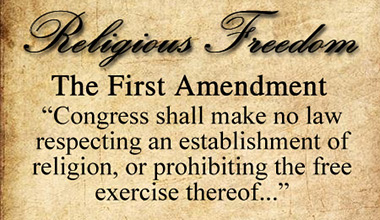
In America, under the able leadership of Isaac Backus (1724 – 1806), Baptists contended that religious freedom must mean no established Church should be adopted by government.  Twenty-seven years after his death, the last state church was disestablished in Massachusetts in 1833.  Historians recognize the role of Baptists in the ratifying of the very first amendment of the US Constitution that: “Congress shall make no law respecting an establishment of religion or prohibiting the free exercise thereof…”   The Christian History Journal [ Issue # 6 “The Baptists” ] notes:

Although Baptists cannot claim all the credit for the triumph of religious liberty and separation of church and state in the United States, they played a key role throughout the nearly two-century struggle to enshrine these principles in the nation’s basic documents of freedom.  As Anson Phelps Stokes, perhaps the most renowned church-state historian of this century wrote, ‘No denomination has its roots more firmly planted in the soil of religious freedom and Church-State separation than the Baptists. On the other hand, George W. Truett, in an historic address on the subject delivered in 1920 from the steps of the U.S. Capitol, called religious liberty ‘the supreme contribution’ of America to the rest of the world, and declared that ‘historic justice compels me to say that it was preeminently a Baptist contribution.’ Because religious liberty is the chief contribution Baptists have made to the social teaching of the church, and because its continuity is essential to proper church-state relations, each generation of Baptists is obligated to contend for it and to extend it to the next generation.

The champion of this separation of Church and State was Thomas Jefferson, a Founding Father and the third president of the United States.  He was no Baptist; was not even an Evangelical Christian.  But he had keen insight into the meaning of separation of Church and State.  In his famous letter to the Danbury Baptists on New Year’s Day of 1802, his words became precedent-setting:

Believing with you that religion is a matter which lies solely between Man & his God, that he owes account to none other for his faith or his worship, that the legitimate powers of government reach actions only, & not opinions, I contemplate with sovereign reverence that act of the whole American people which declared that their legislature should ‘make no law respecting an establishment of religion, or prohibiting the free exercise thereof,’ thus building a wall of separation between Church & State.

Power of the Church

There is just one more objection I must raise.  Dependence on government for the advance of the Church betrays the lack of confidence in the only source of power for the Church – the Holy Spirit through the gospel of Christ.  It must be made clear that this position is not borne of any lack of zeal for the Christian cause and mission.  On the contrary.  It is borne of conviction that, for the Christian cause, the Church is to source it in the only Power it should seek.  And it is not in the sword.  It is in Heaven’s power available to the Church through the Word and Prayer.  Indeed, it must be said that the present evangelical intoxication with politics explains much of the powerlessness of the institutional church.  It must be held with conviction that what we seek is the same as Paul’s: “Our gospel came to you, not only in word, but also in power and in the Holy Spirit with full conviction” (1 Thessalonians 1:5).

Our Baptist forbears flourished without seeking the assistance and interference of government on their behalf.  Are we now to turn this around, and re-enter via the backdoor, seeking the interference of government?  Does government have any power to make a particular day religious by legislated imposition?  I say ‘No!’  That is why I reject the proposition that government may declare a Baptist Day.

June-Pride Open Letter

I plead with you, my dear friend, to consider neither the suppression of self, nor the unrestrained expression of whatever you consider your “authentic self.”  To be misled into what you are told as “authentic” but against the way you are made is really the triumph of the “plastic self.”  God’s will is for you to be the best version of yourself.

My Dear Friend of the LGBTQ+ Community:

This is June Pride – the month of celebrating the LGBTQ+ community.  Let me assure you that I do not write this out of contempt, much less, with any condemnation.  I would not have earned any right to address any individual about sin, unless I am ready to confess with Paul, “I am the worst of sinners” (1 Timothy 1:15). 

Let me not waste your time addressing masculinity and femininity in physical behavior or social habit.  That boys should be playing toy guns, while girls cuddle their dolls – these are social constructs that do not define male or female.  For good measure, I also will not raise the important issue of gender intervention in children through puberty blockers and the like.  It is significant, and especially heinous where, as in many American states, this is mandated without parental authority, let alone, knowledge.  The significant number of those de-transitioning (getting back to their original sex after undergoing ‘gender-change’) cannot be ignored.  I will just suggest for your reference the book, Irreversible Damage, by Abigail Shrier.

Let me be to the point on the advice given one with gender dysphoria to just “be true to oneself,” or something similar: “find your authentic self.”  Behind this language is the rejection of the body as defining of one’s gender.  It may be admitted that the body reveals one’s birth-sex; but it is militantly denied that it is equivalent to gender.  The latter is to be decided by the self.  The body may be male, but the mind may decide that the “authentic self” is female.  And vice-versa, a female body may be reversed by the mind’s decision than one is male.  And the world is expected to accept – on threat of all mechanisms of canceling at the disposal of today’s culture influencers.

NO to Self-Suppression

First of all, let me stress that I am with you in rejecting the option of suppressing self.  This finds its worst form in asceticism – depriving the self of legitimate pleasures and enjoyment, because it will only defile the already native sinfulness of the body.  I do not believe this is a Christian option.  It is the Gnostic heresy that despised the nobility of the physical as part of God’s creation.  The Word of God holds a dignified view of the body.  It teaches, “everything created by God is good, and nothing is to be rejected if it is received with thanksgiving, for it is made holy by the word of God and prayer.” (1 Tim. 4:4-5 ESV).

Unrestrained Self-Expression?

That said, I want to admonish your choice which is at the other end of the spectrum.  You opt for unrestrained expression.  You are made to believe that it is your way to happiness.  This is the kind of self, described by theologian-philosopher, Carl Trueman, “The modern self assumes the authority of inner feelings and sees authenticity as defined by the ability to give social expression to the same. The modern self also assumes that society at large will recognize and affirm this behavior.” [ Strange New World: p. 19; Crossway (2022) ]

The problem with this option is its failure to see that there is in self a dimension that is broken.  The Scriptures call this sinfulness, or theology uses the word “depravity.”  To depend on what the heart dictates is to encounter the reality of what a prophet of old declares, “The heart is deceitful above all things, and desperately wicked.” (Jeremiah 17:9).  No, my friend, no matter how plausible and even singable, the advice “Listen to your heart” is a dead-end street to disappointment and self-inflicted misery.

From Self-Expression to Best Version

My plea, from the compassion of Christ, is be true to your creation.  If you sense a militant contradiction of your feeling, listen to those who have gone through the same struggle but have overcome: once-transgender, but now straight, not by sheer resolve, but by the grace of God.  Sam Allberry writes of his thoughts in Is God Anti-Gay? “Desires for things God has forbidden are a reflection of how sin has distorted me, not how God has made me.”  Christopher Yuan writes his testimony in Out of a Far Country: “I had always thought that the opposite of homosexuality was heterosexuality.  But actually the opposite of homosexuality is holiness.” 

Nancy Pearcey in Love Thy Body has a very pertinent observation: “The sovereign self will not tolerate having its options limited by anything it did not choose — not even its own body.  By contrast, Christianity assigns the human body a much richer dignity and value.  Humans do not need freedom from the body to discover their true, authentic self.  Rather we can celebrate our embodied existence as a good gift from God.  Instead of escaping from the body, the goal is to live in harmony with it.”

I know the foregoing to be true.  While I have never been myself a transgender, I know the lies I tell myself to justify my own lusts and impurities.  They never lead to a good end.

I plead with you, my dear friend, to consider neither the suppression of self, nor the unrestrained expression of whatever you consider your “authentic self.”  To be misled into what you are told as “authentic” but against the way you are made is really the triumph of the “plastic self.”  God’s will is for you to be the best version of yourself.  This is made possible through Christ who made the new creation of one new humanity (Ephesians 2:15).  You will then express in awe of God’s old creation, “O Lord how manifold are your works!  In wisdom, You have made them all” (Psalm 104:24).  Then, you will accept the beauty of God’s creation of man in His image: “Male and female He created them” (Genesis 1:27).

In pleading for Christ,

NAE

The Intermediate State of the Dead in Christ

The body of the dead believer is no better than any dead person.  But it is the condition of the soul that sets apart the believer’s intermediate state – it is to be in the presence of the Savior that once defined his earthly life (Phl 1:21).

A recent death in our Church generated much lament.  The brother was so young, and so actively useful in our ministries.  What is more, he had no known precondition.  This event drove me to refresh the subject of the intermediate state of the righteous.  It is compelling to think of an answer to the condition of one who dies in Christ, but before the consummation at the Second Coming of Christ.

Other subjects attach to this issue which are beyond the purview of  this article.  One may logically ask about the constitution of man – as body and soul (spirit).  Or one’s view of heaven, and its counterpart of hell, may be evaluated.  But they can only be assumed at this point, subordinate to the main question, What happens to the believer at death before Jesus’ return in triumph?

No Soul-Sleep

A view held mostly by fringe cults is that the soul is in a state of unconscious sleep, awaiting the end at Christ’s coming or the Judgment Day.  This notion sounds plausible because there are, in both Old Testament and New Testament, references to dying as ‘sleeping.’  It only takes a step to make the conclusion that the reference is to the soul.

Its main error is the rush to conclusion that it can refer to nothing else but the soul.  But some key references to ‘sleep’ as descriptive of death should lead to a different deduction.  The connection is made in Matthew 27:52: “The tombs also were opened. And many bodies of the saints who had fallen asleep were raised.”  Here, those that are described as “fallen asleep” are explicitly “bodies of the saints.”  This is a difficult passage that does not now demand detailed exposition.  Suffice it to conclude that the figure of sleep for death is clearly that of the body.  Another reference is the death of Stephen with this conclusion: “And as they were stoning Stephen, he called out, ‘Lord Jesus, receive my spirit.’  And falling to his knees he cried out with a loud voice, ‘Lord, do not hold this sin against them.’ And when he had said this, he fell asleep.” (Acts 7:59-60 ESV).  It only needs pointing out that Stephen expected welcome by Jesus to his spirit as he was dying.  And when he died, it was described as, “he fell asleep.”  Clearly, the spirit of Stephen was received by Jesus, but his body fell asleep.

The simple reason for this figure of sleep as reference to the body is the counterpart of the resurrection as being raised (as in being awakened) from death (sleep).  This is Paul’s corrective to the misconstruction of the Thessalonians who thought that the dead in Christ had missed out on the blessing of the Second Coming.  On the contrary, they will even precede those who are alive: “since we believe that Jesus died and rose again, even so, through Jesus, God will bring with him those who have fallen asleep” (1 Thess. 4:14 ESV).

This error was so obvious that the young John Calvin wrote his first book in 1534 to refute soul-sleep.  Its title was Psychopannychia (Literally, “All-night-vigil of the soul”).  So obvious was the error that Calvin in his youth could easily demolish this notion.

No Death Wish

On the other end of the spectrum is the belief that such is the happy state of the soul of the righteous dead that their death should rather be celebrated than mourned.  This attitude is only a small step away to justifying death-wish.  But this is also wrong.

Death is not a good thing.  The biblical position is to regard death as the consequence of sin (Romans 5:12, 18; 6:23).  Adam, had he obeyed the test in the garden, was made to live in a confirmed eternal life.  But his sin has brought death – not only to him, but to all his posterity.  Therefore, death is considered an enemy – the last to be subdued at the end which is through the resurrection of the body (1Cor 15:26).

The believer’s death is still rightly to be mourned.  So the brethren, as they buried Stephen, “made great lamentation” (Acts 8:2).  One reason for this is that earthly fellowship with the dead is totally cut-off.  We may look forward to a reunion, and we do not mourn as those without hope (1Thes 4:13).  But we still rightly mourn.

That Paul asserts, “To die is gain” (Phl 1:21) is regularly misconstrued as a positive view of death for the believer.  But Paul does not say that death is gain.  But rather because of Christ, the event of dying (an evil in itself) can result for the believer something that can be counted as gain.  Note, however, that this is tempered by Paul’s assertion of desire (even preference) to live on and bear fruit of service (1:19, 24).

To look at death as itself desirable is inconsistent with the New Testament teaching about death.  Dying is not the blessed hope of the believer.  The Second Coming of Christ is (Titus 2;14).  There is still a rightful fear of death itself, but redemption should have delivered the believer from the bondage of this fear (Heb 2:14, 15; 2Cor 5:1ff).

“Far Better”

Paul does describe the state after-death of the believer as “far better” (Phl 1:23).  There is one reason that he consistently thrusts to prominence.  At the believer’s death, just like any dead person, his body begins to decay; but his soul/spirit is in the presence of Christ’s company.  His summary of the believer is “to depart and be with Christ” (Phl 1:23).  In another place, “absent from the body, but present with the Lord” (2Cor 5:8).  There can be no more explicit description of the believer’s condition beyond death.  The body of the dead believer is no better than any dead person.  But it is the condition of the soul that sets apart the believer’s intermediate state – it is to be in the presence of the Savior that once defined his earthly life (Phl 1:21).  Other passages corroborate this.  To cite just one more, Jesus promised the penitent thief on the cross, “Today, you shall be with me in paradise” (Luke 23:43).

It is right to describe the after-life of the righteous as “far better.”  It is so in comparison to this earthly life.  But in the redemptive plan of God, it is not yet the best.  Thus the souls in the intermediate state still express their longing for the day of consummation (Rev 6:10).  The best is yet to come.  And that is the reunion of body and soul at the resurrection.  This is now the Final State where the saints’ inheritance is not just heaven, but heaven and earth (2Pet 3:13).

Grieving and Solace

The foregoing thoughts will mean the mixture of grieving and solace when a beloved believer dies.  There will be pain from the poignant void left behind; but there will be anticipation for the reunion yet to come.  For as long as we have not crossed that dividing river of death, such will be the lot of brethren left behind on earth.  But make no mistake.  It is not the living to say goodnight to the dead in Christ.  It is those who have departed to be with Christ who must say goodnight to us who remain in this dark world of sin and death.

The Magnificat of Mary

Our problem is we are so beholden to the status quo.  We think the powers of this world hold sway.  Filipinos are intoxicated with politics.  And here we are again in a political season – everybody is looking for a messiah!  They all are arms of flesh who will, at some points, fail.  We are not to put our hope in princes.  The true Messiah has come!

Our problem is we are so beholden to the status quo.  We think the powers of this world hold sway.  Filipinos are intoxicated with politics.  And here we are again in a political season – everybody is looking for a messiah!  They all are arms of flesh who will, at some points, fail.  We are not to put our hope in princes.  The true Messiah has come!

My soul magnifies the Lord; and my spirit rejoices in God, my Saviour!  (Luke 1:46, 47).  Thus, Mary exclaims in her song of response to Elizabeth’s words.  This song is well-known as the Magnificat.  It comes from the first words of Latin as translated in Jerome’s Vulgate: Magnificat anima mea Dominum.

The song itself is full of references and allusions to the Hebrew Scriptures that Christians call the Old Testament.  Of most notable parallel is with the song of Hannah (mother of Samuel), recorded in 1 Samuel 2:1ff.  It demonstrates Mary’s profound knowledge of the Word of God.  That becomes the substance of her Magnificat – her magnifying of her Lord.  It is indeed a blessed privilege to be chosen as the vessel to bear the Messiah in human conception.  This is a blessedness that Mary herself owns, Behold, from now on all generations will call me Blessed.  Mary is profoundly overwhelmed and humbled by the thought of such blessedness. 

Unfortunately, what is a gracious state that calls forth Mary’s Magnificat, the mainstream Church of history has transformed into a Church title – to be made into an object of reverence by the pious.  In the process, the focus of the Magnificat is lost.  And Mary, as a marvelous model of humility, has undergone an apotheosis into a counterpart mediator.

Humility as God’s gracious instrument

Humility is the character that stands out in Mary’s Magnificat.  Even earlier, her humility emerges in her response to the angelic annunciation that she will conceive in her womb the One who will be the Messiah.  And humility is the grace that befits one who is called to a vocation of instrumentality in God’s plan.  We must frame the blessedness that Mary owns by her words, He has looked on the humble estate of His servant.  This is a woman who is not exalting herself; much less, accepting the exalted status endowed by men, or by the Church.  This is a woman who understands her status as servant – and is duly overwhelmed!

I have admiration for Mary because of her humble attitude.  She understands that it is God’s mercy that has intervened in her life – it is an act of saving grace on her.  We know this from Mary’s own exultation my spirit rejoices in God, my Saviour!  After this, there is only one other place for the title Saviour in the Gospel of Luke.  It is in the angelic announcement to the lowly shepherds: Unto you is born this day in the city of David a Saviour, who is Christ the Lord! (2:11).  Exactly the same two titles in Mary’s Magnificat are attributed to Jesus Christ.  No immaculate conception here of a sinless woman.  She needed a Saviour.  What a glorious privilege that she should bear in her womb the incarnate form of the Saviour, Jesus Christ!  She is not putting her blessedness on top of the rest of humanity.  She expresses wonder why she is counted among the blessed ones!  This is the spirit of one who knows herself to be a sinner, on whom God graciously intervenes.

Reversal through Kingdom invasion

The substance of the angelic announcement to Mary is couched in the language of the Davidic covenant.  In summary, God pledged that One from the progeny of David will be born to claim His throne and reign in a kingdom that will never be destroyed.  That time for fulfillment has come in Jesus.  Mary’s Magnificat is anticipating the reversal of status.  This is because the coming of the Son of God is no less than a kingdom invasion that will reverse the ruling powers of this world.  Mary puts it in a series of contrasts: He brought down the mighty from their thrones… He exalted those of humble estate… He filled the hungry with good things… the rich He has sent away empty; etc.

It calls on us to understand that with the coming of the Son of God, a new age has been inaugurated.  At His resurrection, the Lord Jesus has come to rule.  Certainly, not everyone has yet acknowledged that rule.  There is still very much human power ruling in this world.  But make no mistake, the Christian expectation is: every knee shall bow, and every tongue confess that Jesus is Lord (Phil 2:10, 11). 

Our problem is we are so beholden to the status quo.  We think the powers of this world hold sway.  Filipinos are intoxicated with politics.  And here we are again in a political season – everybody is looking for a messiah!  They all are arms of flesh who will, at some points, fail.  We are not to put our hope in princes.  The true Messiah has come! 

But perhaps, your life is one characterized by a quest for power in other forms – wealth; positions in career.  We cannot be against vocational excellence.  But it does not define what became the last word of the Magnificat – forever!  What defines forever is the One from eternity born in time.

In this season when there is every claim of remembering the birth of Christ, be focused on the One born – Jesus; not the one giving birth – Mary.  But let her Magnificat inspire us to magnify the Lord, and rejoice in God our Saviour!