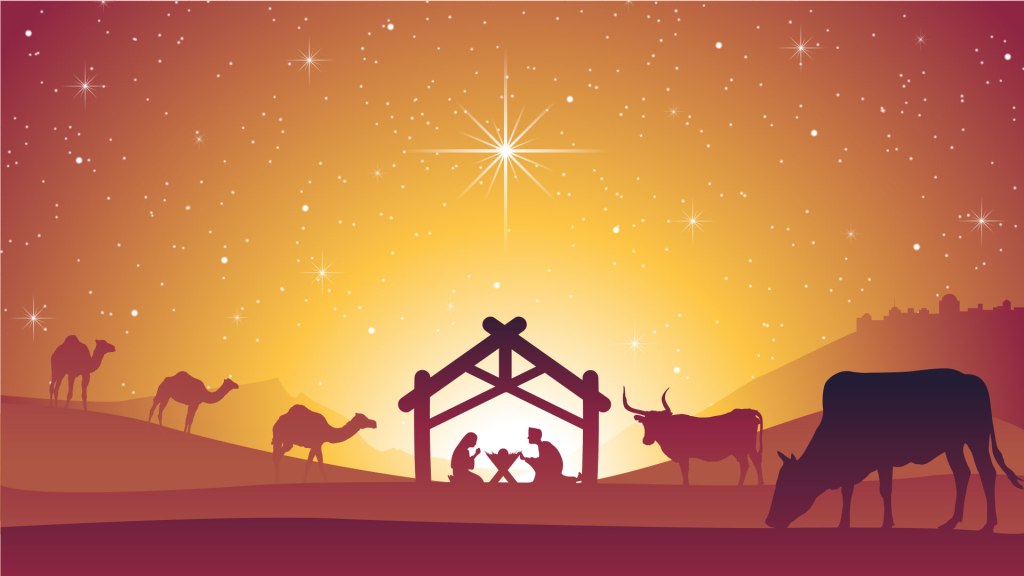
Purpose Fulfilled or Prayer Answered? Angelic Appearance to Zechariah

The story of the birth of Christ should be reflected upon this season with these thoughts entwined in the Christian mind…   If God is not sovereign in His purpose, what is the point of praying?

And there appeared to him an angel of the Lord standing on the right side of the altar of incense.  And Zechariah was troubled when he saw him, and fear fell upon him.  But the angel said to him, “Do not be afraid, Zechariah, for your prayer has been heard, and your wife Elizabeth will bear you a son, and you shall call his name John.”

Lk. 1:11 – 13 ESV

It is a perennial question, often expressed as a puzzle; sometimes, a challenge to argue: If God is sovereign in His purpose, what is the point of praying?  For those untrained in theology, or without fundamental knowledge of the Scriptures, there seems to be no escape from the conundrum.  Let this episode of the appearance of the Angel Gabriel to Zechariah give the answer of simple faith.

Zechariah and Elizabeth are introduced in Luke’s Nativity narrative as “righteous in God’s sight” (1:6), but are childless.  As one may expect of the righteous, they make this a matter of prayer.  Zechariah is also a priest.  At a time for him to exercise his priestly function in the Holy Place of the temple, there appears to him the angel Gabriel.  He tells the astonished Zechariah a news that is just too much for the man to hear.  His wife Elizabeth will conceive and bear a son!  This son is, of course, the Gospels’ John the Baptist.  Peeling off, for the moment, many other lessons in this encounter, just focus on what the angel tells Zechariah.  This is happening, the angel explains, “for your prayer has been heard.”  Here are the two sides of the paradox clearly entwined with no sense of contradiction.

Is It God’s Purpose Fulfilled?

No doubt, it is.  For there are prophecies in the Old Testament concerning the coming of John the Baptist.  He fulfills Isaiah’s prophecy of “a voice cries in the wilderness, prepare the way of the Lord” (Isa 40:3).  Luke’s narrative cites this very prophecy as having been fulfilled (Lk 3:2 – 6).  This is corroborated by Mark 1:2 – 5 and John 1:23.  Besides this prophecy, the coming of Elijah is cited by no less than Jesus as being fulfilled in John the Baptist (Matt 17:11ff), a reference to the prophecy of Malachi 4:5, 6. 

We must conclude from this that the birth of John the Baptist is part of God’s redemptive plan.  Therefore it was conceived in eternity, and prophesied many generations before the event.  The purpose of God is fulfilled.  It reveals the sovereignty of God, and that His redemption plan is never going to fail – not in its preparation (from the Old Testament until John the Baptist), and not in its inauguration and consummation (the First Coming and the Second Coming of Christ). 

Is It Man’s Prayer Answered?

Without ambiguity from the Angel Gabriel, it is.  There can be no falsehood in those words, “for your prayer has been heard.”  Should we see contradiction?  That can only be the conclusion of one already prejudiced against the truth.  But for one who will follow as the Word of God leads, no matter where, will see the blessed paradox – two sides of the truth entwined.  The God who ordains the event is not slack in the arrangement of means – including the prayers of His people. 

It is important across the board in many areas of Christian duty.  Has God chosen those He will save?  There is no doubt, based on the Scriptures, that He has.  But He has also appointed the means – evangelism; intercession; etc.  One may not be irresponsible in the means and have any reason to expect that God will save the elect through him.  So with matters of prayer.  What we pray for, when according to the will of God, we may rest secure is heard and answered by God.  That answer is not a change in the mind of God, but the confirmation of His purpose.  Nothing comes to pass that is not according to His will (Eph 1:11).  But for the good of His people, we may also affirm that prayers are truly heard by God.  Praying is not a game of make-believe.  Things really happen in answer to prayers.  The story of the birth of Christ should be reflected upon this season with these thoughts entwined in the Christian mind.

Indeed, we may reverse the challenge with which we begin:  If God is not sovereign in His purpose, what is the point of praying?

Overturned Favor; Overruled Error: Herod the Great and the Magi

We must not think of people who are in error to be hopeless in discovering Christ. That unless they get their knowledge from the Scriptures, there is no way to find Christ. Or even for some, unless they are solidly Calvinistic or Reformed, they are as good as damned! Thankfully, the mercy of God is greater than our prejudices. The Magi found Christ. Their error was overruled. That is the sovereign mercy of God.

We must not think of people who are in error to be hopeless in discovering Christ.  That unless they get their knowledge from the Scriptures, there is no way to find Christ.  Or even for some, unless they are solidly Calvinistic or Reformed, they are as good as damned!  Thankfully, the mercy of God is greater than our prejudices.  The Magi found Christ.  Their error was overruled.  That is the sovereign mercy of God.

Only the Gospel of Matthew gives the narrative of the Magi’s visit to the child Jesus (Matt 2:1 – 12).  Necessary corrections: (a) They are not Three Kings (neither three nor kings!); (b) They are nameless (no Gaspar; Balthazzar, and Melchor); (c) They are not among the visitors to the manger to honor the Baby Jesus.  It has been a while since the birth itself.  Herod himself calculated some two years since.  And the narrative says, “going into the house, they saw the child with Mary his mother, and they fell down and worshiped him” (2:11).

The narrative is pregnant with lessons consonant with Matthew’s purpose of presenting the theme of Christ’s kingdom.  Two lessons especially pertain to how people encounter that kingdom claim of Christ in different ways with opposite results.

HEROD THE GREAT – OVERTURNED FAVOR

Herod bore the title of “King of Judea” (Luke 1:5).  He was not a real Jew, though, but an Edomite.  Thus he always felt vulnerable to his hold on power.  While he was  known for his great building projects, this was matched by a great paranoia.  He had some of his own family members killed when he perceived them as threat.  Here was a man who will do anything – even the foulest means – to keep himself in power.

Yet, he was a highly favored man.  The narrative brings this out in his consultation with the Scripture-experts of his court.  When he learned from the Magi of the birth of one who was “King of the Jews,” Herod wasted no time to determine what the Scriptures prophesied concerning this.  Is this not a great favor?  He had the Scriptures as guide, with teachers to tell him how to understand them.  But he used his knowledge, gained from the Scriptures, to make the grim plot of having Jesus killed.  And just to make sure, he had all male children, two years and under, massacred in Bethlehem.  His knowledge of the Scriptures, which should have been a favor, was overturned to his own greater condemnation.  With that knowledge of the Scriptures, he sought to eliminate the Christ.

There are many Herod’s in churches today.  They are taught the Scriptures on a regular basis.  But rather than turning to Jesus for their salvation, the more their hearts are hardened against Him.  What a tragedy to face the judgment saddled with favor overturned!

THE MAGI – OVERRULED ERROR

Who were the Magi?  Some translations have “Wise men.”  Magoi (plural of magos) is used in the OT Septuagint to refer to the magicians in Nebuchadnezzar’s court (Dan 2:2, 10).  In the NT, other than this narrative, the word is only used of Simon the magician (Acts 8:9ff) and of Elymas the sorcerer (Acts 13:8).  Since these Magi in Matthew’s narrative interpreted the star, the best conjecture is that they are probably astrologers.  But whatever range of possibility, they belong to those pagans who were looking for the “King of the Jews” through heavenly signs.  This is forbidden in the Mosaic Law and is indicted by the prophets. 

We can only conclude from this that God, in His sovereign mercy, has overruled providentially the error of the Magi to lead them to Christ.  And when they saw Him, they worshiped Him.  Whether they have turned into true believers is immaterial at this point.  What is not to be missed is the mercy of God.  That mercy can penetrate through the wrappings of error and bring the erring ones to the Lord Jeus Christ. 

We must not think of people who are in error to be hopeless in discovering Christ.  That unless they get their knowledge from the Scriptures, there is no way to find Christ.  Or even for some, unless they are solidly Calvinistic or Reformed, they are as good as damned!  Thankfully, the mercy of God is greater than our prejudices.  The Magi found Christ.  Their error was overruled.  That is the sovereign mercy of God.

CHRIST and HIS KINGDOM

There are attempts to see the star as a natural phenomenon.  Some see Halley’s comet; and others see the conjunction of planets Jupiter and Saturn, the latter can be approximated to about Jesus’ birth-year.  But whether natural phenomenon, or simply a miracle of God (which I favor), Matthew is using this as a pointer to Old Testament prophecy.  He has the Magi call this, after all, “his star when it rose” (or better, “his rising star”).  This is an echo of the prophecy of Balaam (even against his will, but put by God in his mouth): “I see him, but not now; I behold him, but not near: a star shall come out of Jacob, and a scepter shall rise out of Israel” (Num 24:17).

Through his unique narrative of the Magi’s visit, Matthew is presenting the kingdom of Christ.  That Herod failed to kill Jesus proves that His kingdom is indestructible by His enemies.  That the pagan Magi were led to Jesus reveals Matthew’s theme: Subjects of the kingdom of Christ will come from all nations through God’s sovereign mercy.  Thus, the mission that it leaves the Church, Matthew is to give the most familiar version of all: “Make disciples of all the nations” (Matthew 28:19).

The Magnificat of Mary

Our problem is we are so beholden to the status quo.  We think the powers of this world hold sway.  Filipinos are intoxicated with politics.  And here we are again in a political season – everybody is looking for a messiah!  They all are arms of flesh who will, at some points, fail.  We are not to put our hope in princes.  The true Messiah has come!

Our problem is we are so beholden to the status quo.  We think the powers of this world hold sway.  Filipinos are intoxicated with politics.  And here we are again in a political season – everybody is looking for a messiah!  They all are arms of flesh who will, at some points, fail.  We are not to put our hope in princes.  The true Messiah has come!

My soul magnifies the Lord; and my spirit rejoices in God, my Saviour!  (Luke 1:46, 47).  Thus, Mary exclaims in her song of response to Elizabeth’s words.  This song is well-known as the Magnificat.  It comes from the first words of Latin as translated in Jerome’s Vulgate: Magnificat anima mea Dominum.

The song itself is full of references and allusions to the Hebrew Scriptures that Christians call the Old Testament.  Of most notable parallel is with the song of Hannah (mother of Samuel), recorded in 1 Samuel 2:1ff.  It demonstrates Mary’s profound knowledge of the Word of God.  That becomes the substance of her Magnificat – her magnifying of her Lord.  It is indeed a blessed privilege to be chosen as the vessel to bear the Messiah in human conception.  This is a blessedness that Mary herself owns, Behold, from now on all generations will call me Blessed.  Mary is profoundly overwhelmed and humbled by the thought of such blessedness. 

Unfortunately, what is a gracious state that calls forth Mary’s Magnificat, the mainstream Church of history has transformed into a Church title – to be made into an object of reverence by the pious.  In the process, the focus of the Magnificat is lost.  And Mary, as a marvelous model of humility, has undergone an apotheosis into a counterpart mediator.

Humility as God’s gracious instrument

Humility is the character that stands out in Mary’s Magnificat.  Even earlier, her humility emerges in her response to the angelic annunciation that she will conceive in her womb the One who will be the Messiah.  And humility is the grace that befits one who is called to a vocation of instrumentality in God’s plan.  We must frame the blessedness that Mary owns by her words, He has looked on the humble estate of His servant.  This is a woman who is not exalting herself; much less, accepting the exalted status endowed by men, or by the Church.  This is a woman who understands her status as servant – and is duly overwhelmed!

I have admiration for Mary because of her humble attitude.  She understands that it is God’s mercy that has intervened in her life – it is an act of saving grace on her.  We know this from Mary’s own exultation my spirit rejoices in God, my Saviour!  After this, there is only one other place for the title Saviour in the Gospel of Luke.  It is in the angelic announcement to the lowly shepherds: Unto you is born this day in the city of David a Saviour, who is Christ the Lord! (2:11).  Exactly the same two titles in Mary’s Magnificat are attributed to Jesus Christ.  No immaculate conception here of a sinless woman.  She needed a Saviour.  What a glorious privilege that she should bear in her womb the incarnate form of the Saviour, Jesus Christ!  She is not putting her blessedness on top of the rest of humanity.  She expresses wonder why she is counted among the blessed ones!  This is the spirit of one who knows herself to be a sinner, on whom God graciously intervenes.

Reversal through Kingdom invasion

The substance of the angelic announcement to Mary is couched in the language of the Davidic covenant.  In summary, God pledged that One from the progeny of David will be born to claim His throne and reign in a kingdom that will never be destroyed.  That time for fulfillment has come in Jesus.  Mary’s Magnificat is anticipating the reversal of status.  This is because the coming of the Son of God is no less than a kingdom invasion that will reverse the ruling powers of this world.  Mary puts it in a series of contrasts: He brought down the mighty from their thrones… He exalted those of humble estate… He filled the hungry with good things… the rich He has sent away empty; etc.

It calls on us to understand that with the coming of the Son of God, a new age has been inaugurated.  At His resurrection, the Lord Jesus has come to rule.  Certainly, not everyone has yet acknowledged that rule.  There is still very much human power ruling in this world.  But make no mistake, the Christian expectation is: every knee shall bow, and every tongue confess that Jesus is Lord (Phil 2:10, 11). 

Our problem is we are so beholden to the status quo.  We think the powers of this world hold sway.  Filipinos are intoxicated with politics.  And here we are again in a political season – everybody is looking for a messiah!  They all are arms of flesh who will, at some points, fail.  We are not to put our hope in princes.  The true Messiah has come! 

But perhaps, your life is one characterized by a quest for power in other forms – wealth; positions in career.  We cannot be against vocational excellence.  But it does not define what became the last word of the Magnificat – forever!  What defines forever is the One from eternity born in time.

In this season when there is every claim of remembering the birth of Christ, be focused on the One born – Jesus; not the one giving birth – Mary.  But let her Magnificat inspire us to magnify the Lord, and rejoice in God our Saviour!