Purpose Fulfilled or Prayer Answered? Angelic Appearance to Zechariah

The story of the birth of Christ should be reflected upon this season with these thoughts entwined in the Christian mind…   If God is not sovereign in His purpose, what is the point of praying?

And there appeared to him an angel of the Lord standing on the right side of the altar of incense.  And Zechariah was troubled when he saw him, and fear fell upon him.  But the angel said to him, “Do not be afraid, Zechariah, for your prayer has been heard, and your wife Elizabeth will bear you a son, and you shall call his name John.”

Lk. 1:11 – 13 ESV

It is a perennial question, often expressed as a puzzle; sometimes, a challenge to argue: If God is sovereign in His purpose, what is the point of praying?  For those untrained in theology, or without fundamental knowledge of the Scriptures, there seems to be no escape from the conundrum.  Let this episode of the appearance of the Angel Gabriel to Zechariah give the answer of simple faith.

Zechariah and Elizabeth are introduced in Luke’s Nativity narrative as “righteous in God’s sight” (1:6), but are childless.  As one may expect of the righteous, they make this a matter of prayer.  Zechariah is also a priest.  At a time for him to exercise his priestly function in the Holy Place of the temple, there appears to him the angel Gabriel.  He tells the astonished Zechariah a news that is just too much for the man to hear.  His wife Elizabeth will conceive and bear a son!  This son is, of course, the Gospels’ John the Baptist.  Peeling off, for the moment, many other lessons in this encounter, just focus on what the angel tells Zechariah.  This is happening, the angel explains, “for your prayer has been heard.”  Here are the two sides of the paradox clearly entwined with no sense of contradiction.

Is It God’s Purpose Fulfilled?

No doubt, it is.  For there are prophecies in the Old Testament concerning the coming of John the Baptist.  He fulfills Isaiah’s prophecy of “a voice cries in the wilderness, prepare the way of the Lord” (Isa 40:3).  Luke’s narrative cites this very prophecy as having been fulfilled (Lk 3:2 – 6).  This is corroborated by Mark 1:2 – 5 and John 1:23.  Besides this prophecy, the coming of Elijah is cited by no less than Jesus as being fulfilled in John the Baptist (Matt 17:11ff), a reference to the prophecy of Malachi 4:5, 6. 

We must conclude from this that the birth of John the Baptist is part of God’s redemptive plan.  Therefore it was conceived in eternity, and prophesied many generations before the event.  The purpose of God is fulfilled.  It reveals the sovereignty of God, and that His redemption plan is never going to fail – not in its preparation (from the Old Testament until John the Baptist), and not in its inauguration and consummation (the First Coming and the Second Coming of Christ). 

Is It Man’s Prayer Answered?

Without ambiguity from the Angel Gabriel, it is.  There can be no falsehood in those words, “for your prayer has been heard.”  Should we see contradiction?  That can only be the conclusion of one already prejudiced against the truth.  But for one who will follow as the Word of God leads, no matter where, will see the blessed paradox – two sides of the truth entwined.  The God who ordains the event is not slack in the arrangement of means – including the prayers of His people. 

It is important across the board in many areas of Christian duty.  Has God chosen those He will save?  There is no doubt, based on the Scriptures, that He has.  But He has also appointed the means – evangelism; intercession; etc.  One may not be irresponsible in the means and have any reason to expect that God will save the elect through him.  So with matters of prayer.  What we pray for, when according to the will of God, we may rest secure is heard and answered by God.  That answer is not a change in the mind of God, but the confirmation of His purpose.  Nothing comes to pass that is not according to His will (Eph 1:11).  But for the good of His people, we may also affirm that prayers are truly heard by God.  Praying is not a game of make-believe.  Things really happen in answer to prayers.  The story of the birth of Christ should be reflected upon this season with these thoughts entwined in the Christian mind.

Indeed, we may reverse the challenge with which we begin:  If God is not sovereign in His purpose, what is the point of praying?

Overturned Favor; Overruled Error: Herod the Great and the Magi

We must not think of people who are in error to be hopeless in discovering Christ. That unless they get their knowledge from the Scriptures, there is no way to find Christ. Or even for some, unless they are solidly Calvinistic or Reformed, they are as good as damned! Thankfully, the mercy of God is greater than our prejudices. The Magi found Christ. Their error was overruled. That is the sovereign mercy of God.

We must not think of people who are in error to be hopeless in discovering Christ.  That unless they get their knowledge from the Scriptures, there is no way to find Christ.  Or even for some, unless they are solidly Calvinistic or Reformed, they are as good as damned!  Thankfully, the mercy of God is greater than our prejudices.  The Magi found Christ.  Their error was overruled.  That is the sovereign mercy of God.

Only the Gospel of Matthew gives the narrative of the Magi’s visit to the child Jesus (Matt 2:1 – 12).  Necessary corrections: (a) They are not Three Kings (neither three nor kings!); (b) They are nameless (no Gaspar; Balthazzar, and Melchor); (c) They are not among the visitors to the manger to honor the Baby Jesus.  It has been a while since the birth itself.  Herod himself calculated some two years since.  And the narrative says, “going into the house, they saw the child with Mary his mother, and they fell down and worshiped him” (2:11).

The narrative is pregnant with lessons consonant with Matthew’s purpose of presenting the theme of Christ’s kingdom.  Two lessons especially pertain to how people encounter that kingdom claim of Christ in different ways with opposite results.

HEROD THE GREAT – OVERTURNED FAVOR

Herod bore the title of “King of Judea” (Luke 1:5).  He was not a real Jew, though, but an Edomite.  Thus he always felt vulnerable to his hold on power.  While he was  known for his great building projects, this was matched by a great paranoia.  He had some of his own family members killed when he perceived them as threat.  Here was a man who will do anything – even the foulest means – to keep himself in power.

Yet, he was a highly favored man.  The narrative brings this out in his consultation with the Scripture-experts of his court.  When he learned from the Magi of the birth of one who was “King of the Jews,” Herod wasted no time to determine what the Scriptures prophesied concerning this.  Is this not a great favor?  He had the Scriptures as guide, with teachers to tell him how to understand them.  But he used his knowledge, gained from the Scriptures, to make the grim plot of having Jesus killed.  And just to make sure, he had all male children, two years and under, massacred in Bethlehem.  His knowledge of the Scriptures, which should have been a favor, was overturned to his own greater condemnation.  With that knowledge of the Scriptures, he sought to eliminate the Christ.

There are many Herod’s in churches today.  They are taught the Scriptures on a regular basis.  But rather than turning to Jesus for their salvation, the more their hearts are hardened against Him.  What a tragedy to face the judgment saddled with favor overturned!

THE MAGI – OVERRULED ERROR

Who were the Magi?  Some translations have “Wise men.”  Magoi (plural of magos) is used in the OT Septuagint to refer to the magicians in Nebuchadnezzar’s court (Dan 2:2, 10).  In the NT, other than this narrative, the word is only used of Simon the magician (Acts 8:9ff) and of Elymas the sorcerer (Acts 13:8).  Since these Magi in Matthew’s narrative interpreted the star, the best conjecture is that they are probably astrologers.  But whatever range of possibility, they belong to those pagans who were looking for the “King of the Jews” through heavenly signs.  This is forbidden in the Mosaic Law and is indicted by the prophets. 

We can only conclude from this that God, in His sovereign mercy, has overruled providentially the error of the Magi to lead them to Christ.  And when they saw Him, they worshiped Him.  Whether they have turned into true believers is immaterial at this point.  What is not to be missed is the mercy of God.  That mercy can penetrate through the wrappings of error and bring the erring ones to the Lord Jeus Christ. 

We must not think of people who are in error to be hopeless in discovering Christ.  That unless they get their knowledge from the Scriptures, there is no way to find Christ.  Or even for some, unless they are solidly Calvinistic or Reformed, they are as good as damned!  Thankfully, the mercy of God is greater than our prejudices.  The Magi found Christ.  Their error was overruled.  That is the sovereign mercy of God.

CHRIST and HIS KINGDOM

There are attempts to see the star as a natural phenomenon.  Some see Halley’s comet; and others see the conjunction of planets Jupiter and Saturn, the latter can be approximated to about Jesus’ birth-year.  But whether natural phenomenon, or simply a miracle of God (which I favor), Matthew is using this as a pointer to Old Testament prophecy.  He has the Magi call this, after all, “his star when it rose” (or better, “his rising star”).  This is an echo of the prophecy of Balaam (even against his will, but put by God in his mouth): “I see him, but not now; I behold him, but not near: a star shall come out of Jacob, and a scepter shall rise out of Israel” (Num 24:17).

Through his unique narrative of the Magi’s visit, Matthew is presenting the kingdom of Christ.  That Herod failed to kill Jesus proves that His kingdom is indestructible by His enemies.  That the pagan Magi were led to Jesus reveals Matthew’s theme: Subjects of the kingdom of Christ will come from all nations through God’s sovereign mercy.  Thus, the mission that it leaves the Church, Matthew is to give the most familiar version of all: “Make disciples of all the nations” (Matthew 28:19).

PRIDE Month – Indeed!

Yes, to insist on an identity other than male and female is to go against God and His intention for human flourishing.  But there is grace even for those who are deep in that rebellion.  So let Christians be convictional in their rejection of this moral insanity.  But let them be compassionate for even of such is the grace of Jesus Christ.

It is Pride Month.  It is that season of the year when the world celebrates society’s rejection of God’s created binary sexuality of Male and Female.  Do they even need a month for it?  They celebrate it almost everyday!  But no label could have been more apt for such a celebration.  It is PRIDE! 

What else is it when one thinks he/she can sweep aside millennia of wisdom that always thought of humanity as male and female?  What else is it when anyone, against the inflexible reality of his/her biological nature, professes he/she can be the opposite by just the decision of the mind?  And all the world must accept it, nay, celebrate it.  Otherwise, the ever-present threat is to be cancelled.

Of course, that is all they can do.  They will not win in a fair debate where both sides are heard.  If the side of binary conviction is even given a hearing, the LGBTQ position will shrivel in its own self-defeating insanity.  So, they have no choice but to cancel, rather than engage in debate.

But there are now signs that some conservatives are waking to their hidden power.  For after all, reason still triumphs over moral insanity.  When conservatives, in their moral rage, say “Enough is enough!” the moral insanity feels that power.  Take Bud Light and Target.  And just now, Elon Musk endorsed the Matt Walsh documentary, “What is a woman?”  It happened after attempts to suppress it by the vestigial extreme progressives in Twitter.

Christians may share moral rage with conservatives of the political spectrum.  But Christians have more to offer.  In the language of Paul, in listing the unrighteous who will not inherit the kingdom of God, he includes: “nor homosexuals, nor sodomites.”  But he does not end with a note of condemnation, but with the hope of salvation: “And such were some of you. But you were washed, but you were sanctified, but you were justified in the name of the Lord Jesus and by the Spirit of our God.” (1 Cor. 6:9 – 11 NKJ)

Yes, to insist on an identity other than male and female is to go against God and His intention for human flourishing.  But there is grace even for those who are deep in that rebellion.  So let Christians be convictional in their rejection of this moral insanity.  But let them be compassionate for even of such is the grace of Jesus Christ.

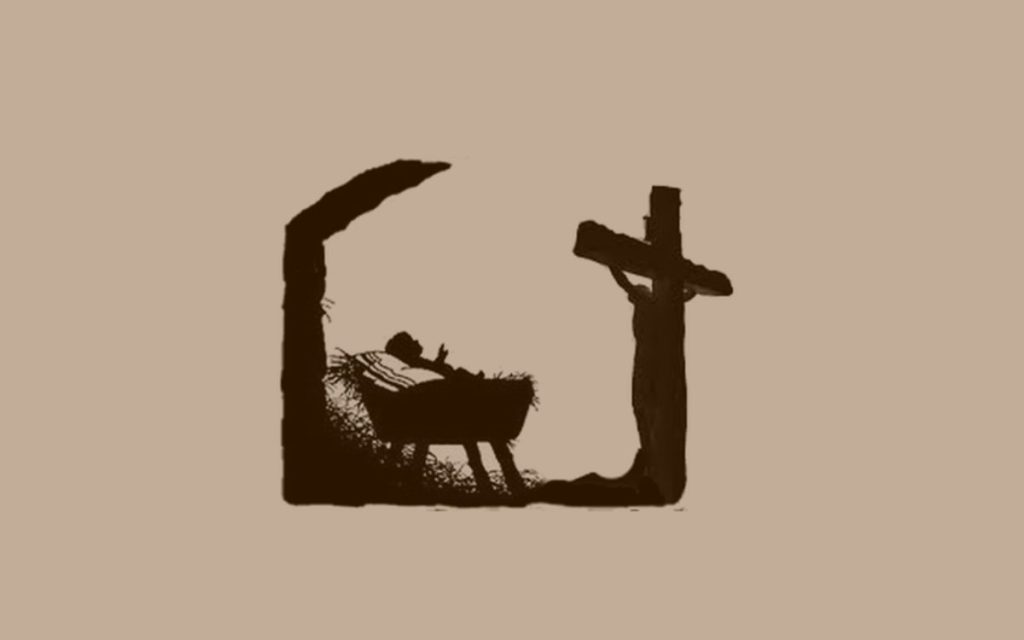
Manger… Cross… Crown

God, the Son, had to become human in order to be a fit Substitute for sinners and take the curse of their sins.  That is why He was born.  The manger is meaningful only because it is meant to lead to the Cross. 

God, the Son, had to become human in order to be a fit Substitute for sinners and take the curse of their sins.  That is why He was born.  The manger is meaningful only because it is meant to lead to the Cross.

Give love on Christmas Day… No greater gift is there than love.  This favorite song usually during this season is made popular by the catching voice of the Jackson Five.  But did you know that not a single line of that song refers to the birth of Christ?  It has a reference to Santa Claus (Every little child on Santa’s knee, has room for your love underneath his tree!), but not to what this season is supposed to be celebrating.  Its give-away message is probably couched in that line: It’s that once of year when the world’s sincere.  It is ironic that it should choose the very character that can never be seasonal – sincerity!

No icon of the Christian story is more fashionable in this season than that of the manger.  The baby Jesus in the manger – so “Christmas is for children.”  Add the wise men (not three kings!) bearing gifts – so it is time for gift-giving.  Lost in all of these is the very reason for the manger.  Lost is the centrality of the Cross.  I suggest that there are two paradigms that relate the manger and the cross – the first is the popular one, and it is wrong; the second is the biblical belief.

The Manger OR the Cross

The way Christmas is celebrated, even when rationalized as remembering the birth of Christ, it misses the significance of that birth.  It is not because the baby in the manger had a halo to distinguish it from other babies.  He had none.  Like other babies, it would be crying and make a mess.  The wonder of the manger is that this is what God became.  The Bible gives that astounding statement: “The Word became flesh” (John 1:14).  It is the Word earlier identified as “In the beginning was the Word, and the Word was with God, and the Word was God.”  New Testament scholar D.A. Carson insightfully calls the Word as both “God’s own Self” and “God’s own Fellow.”  In theology, it is called the Incarnation.  Augustine has this well-known summary: “Remaining what He was, He became what He was not.”

There must be necessity for such a condescension to happen.  The very wonder of that birth is its message of lowliness.  We can only appreciate that lowliness if we accept the biblical teaching of the pre-existent identity of the One born.  He is the eternal God who chose to be human.  The Creator became a creature.  He who made all things chose to be One of whom it was asked: Is this not the carpenter? (Mark 6:3).

For many, the manger has an independent meaning to itself.  When linked with the cross, it is a no-brainer to decide which one is preferred by the world.  Here lies the problem.  Even if we take the manger on its own merit, it challenges us with the humbleness of its character.  This is not like the birth of the crown-heir of the British throne – announced to the world with all the regalia of royal festivity.  It is the birth of the One who “did not count equality with God a thing to be grasped, but humbled himself, by taking the form of a servant” (Philippians 2:6-7).  Think of this when you think again of the manger.  The insight of faith should discover to you the dissonance of the ostentation and materialism characterizing this season with the humiliation (to use the old theological term) of the Son of God.

But the manger cannot be taken as having independent significance.  It has its reason.

The Manger TO the Cross

The New Testament is unambiguously lucid in its teaching on the humanity of Jesus.  Anselm’s medieval query, Cur Deus Homo (literally, “Why a God Human”) has a clear answer. 

As to what His humanity consists, the writer of Hebrews is straightforward: “Therefore he had to be made like his brothers in every respect, so that he might become a merciful and faithful high priest in the service of God, to make propitiation for the sins of the people.” (Hebrews 2:17).  He was human in every way – in all but sin.  The reason given is to make propitiation for the sins of the people.  The word propitiation is one of the effects of sacrifice – in a ceremonial way, it pacified the just wrath of God.  Except that in Jesus, it was not ceremonial.  It was actual, and permanent as once-for-all.  In the simplest form, He needed to be completely human in order that He might suffer the death of sacrifice for the sins of the world.  He was born in the manger, lived a perfect life, and to fulfill the mission of the Cross.  The Manger is not a self-meaningful event.  Its meaning is in preparing the Son of God for the Cross.

Thus Paul asserts: “But when the fullness of time had come, God sent forth his Son, born of woman, born under the law, to redeem those who were under the law, so that we might receive adoption as sons.” (Galatians 4:4-5).  Earlier, in the same context, Paul explains what this redemption involved: “Christ redeemed us from the curse of the Law by becoming a curse for us” (3:13).  God, the Son, had to become human in order to be a fit Substitute for sinners and take the curse of their sins.  That is why He was born.  The manger is meaningful only because it is meant to lead to the Cross. 

Thus, the New Testament Church is given an institution of sacraments that will remember the death and resurrection of Christ.  While one may recognize the liberty of those who wish to celebrate the manger, it is not biblically mandated.  Celebrating the death of Christ is mandated through baptism and the Lord’s Supper.

The Empty Tomb TO the Crown

The death of Christ led to His burial.  As He promised, on the third Day He rose from the dead, and left for His disciples nothing but an empty tomb for them to witness.  Through His resurrection, and later Ascension, He gave fulfillment to the long-awaited promise of the Son of David who will fill the throne and reign in a kingdom that will have no end.  This has already began.  As Peter declares in the first post-resurrection sermon on Pentecost, Jesus has fulfilled the Davidic covenant promise of being seated on His throne (Acts 2:30ff).

This is the real celebration of believers.  It happens not seasonally every last month of the year.  It is being done every Lord’s Day when the Church assembles for worship.  It is remembered in an especial way when a believer is baptized, and when the community shares the emblems of bread and fruit of the vine – to commune with the body and blood of the Lord Jesus Christ. 

But yes, let us also celebrate the manger befitting its lowliness.  Let us be amazed at the incarnation of the Son of God.  But let us always bear in mind that it all led to the real turning-point event of redemptive history, and even of world history – the Cross of our now-crowned Lord Jesus Christ!  Glory to Him!

Nunc Dimittis: A Year-End Reflection

That challenges believers to look at their mission as part of God’s worldwide plan for His kingdom. No one will reach the whole of humanity. But each individual servant of Christ – by serving the kingdom in his piece of humanity (even a mother to her child) – will contribute to the worldwide coverage of the mission of Christ. This demands of believers a kingdom outlook – that which sees life in the light of the rule of Christ. Christ rules by virtue of His death and resurrection. Every believer must sense his mission to extend that rule whatever place of the world is allotted to him. That is when we are doing our mission. That is when we can have a sense of mission accomplished, and be able to say when done, Nunc Dimittis, dismiss your servant in peace.

Sovereign Lord, as you have promised, you may dismiss your servant in peace!  (Luke 2:29).  These were the first words uttered by Simeon upon seeing the child Jesus.  Recognizing the child as the Messiah that Simeon was promised to see before he was to die, Simeon breaks forth into a hymn.  It is the third of three hymns that Luke uses in his Nativity narrative.  We have seen Mary’s Magnificat (Luke 1:46ff) and Zechariah’s Benedictus (Luke 1:68ff).  The shortest and the least-known of the hymns is this one by Simeon, known in the first words of Jerome’s Latin Vulgate as Nunc Dimittis (‘Now, dismiss me’).  There are good thoughts here for a year-end reflection.

This is the only place where the character of Simeon is mentioned.  He is introduced as righteous and devout.  He received a revelation that he will see the Messiah (every pious Jew’s hope), before his life ends.  He must have waited for the day with eagerness.  Until one day in the Temple, amidst the daily ceremonies of dedication and circumcision of children, his eyes see Joseph and Mary and the child they have brought for dedication.  Instantly, Simeon recognizes Him to be the long-promised Messiah.  He carries the child in his arms and sings his hymn.  This is the first in the inspired record of a verbal reaction to the Messiah in-person.  Simeon’s song intones with a sense of mission accomplished.  And he has a sense of peace as he addresses the Lord: you may now dismiss your servant in peace!

For a year-end reflection, the passage is rich with meaning and implication.  We too have a mission to accomplish because of the coming of the Son of God.

A Mission Covering All Sinners

Simeon’s song brings together two groups of peoples that rarely combine with positive note – Israel and Gentiles.  And even more rarely, Simeon mentions the Gentiles first: revelation to the Gentiles… and for the glory of your people, Israel.  In Simeon’s mind, what makes this child in his arms unique is that the plan of God from eternity has come on earth, and it now covers the whole of humanity.

The coming of Christ makes the mission global.  It is now for the whole world.  Christian mission is for all humanity.

It has always been so in the plan of God.  Even in the calling of Abraham, God made clear to Abraham, In you, all the families of the earth will be blessed (Geb 12:3).  But over generations, the Israelites petrified this living hope into an exclusivism that translated into contempt for other nations – the Gentiles.  Now the birth of Jesus would refresh the original plan of God.  It is His intention to reach the whole of humanity through the Saviour, the Lord Jesus.  Simeon calls this baby Salvation.  That early, he establishes the basic truth that salvation is not an institution, not a set of works to accomplish.  Salvation is in the Person of the Messiah – Jesus, the Son of God.

But this salvation is now offered to all humanity.  Unfortunately, there are still groups of believers today who think that Israel (the Middle East nation) holds a special place in the plan of God that is above all other nations.  We must reject that, and refresh the original intention that Israel was the means by which God will reach out to the nations of the world.

That challenges believers to look at their mission as part of God’s worldwide plan for His kingdom.  No one will reach the whole of humanity.  But each individual servant of Christ – by serving the kingdom in his piece of humanity (even a mother to her child) – will contribute to the worldwide coverage of the mission of Christ.  This demands of believers a kingdom outlook – that which sees life in the light of the rule of Christ.  Christ rules by virtue of His death and resurrection.  Every believer must sense his mission to extend that rule whatever place of the world is allotted to him.  That is when we are doing our mission.  That is when we can have a sense of mission accomplished, and be able to say when done, Nunc Dimittis, dismiss your servant in peace.

Will our dismissal from the year 2021 be one of peace, God’s shalom, because we have done our mission for this year?

A Message Demanding a Response

In his address to Mary, Simeon prophesies: This child is appointed for the fall and rising of many.  Some commentators see fall and rising as covering the same identity – people who will come to Jesus, and will first experience the fall in conviction before the rise of conversion.  That is possible.  But it is better to see this song as extending the contrast sustained in the first two other hymns of Mary’s Magnificat and Zechariah’s Benedictus. 

What it does tell us is that Jesus remains a message that divides humanity based on response to Him.  We stand against division of humanity based on racial identity or social status.  But Jesus Himself asserts that there is an inevitable division based on response to Him and the gospel message.  Peter divides humanity as honor is for you who believe, but for those who do not believe; etc. (1 Peter 2:7).  Simeon describes the Child as One for a sign to be opposed.  This is a word that Luke uses in Acts for contradicting the message (cf. Acts 13:45).  Jesus remains the fall (of those who will oppose the message) and the rising (those who will believe in Him as Lord and Savior) of many.  On which side are you as you conclude this year?

A Master Deciding the Discharge

This brings us back to Simeon’s Nunc Dimittis.  It means ‘dismiss now.’  The original Greek has the sense of leaving the presence of another.  The immediate application is dying and being discharged from our life on earth. 

For someone like Simeon, the thought of dismissal from life is one that gives peace.  That is because of his sense of mission accomplished.  He acknowledges that the sovereign decision belongs to the Lord.  He uses a different term for Lord than the usual.  His word can be literally translated despot.  To call someone’s rule as despotic is extremely negative in current usage.  But that is not the sense in Simeon’s calling of his Lord.  It simply acknowledges that it is the Lord to sovereignly decide.

That dismissal may be from this life.  Like a soldier, it is possible to be discharged honorably or dishonorably.  We could think of some who had been dismissed rather dishonorably from this life in 2021.  One cannot think of the name Ravi Zacarias, without squirming at the mess his death had left behind.  But others had given their mission a luster of honor when their dismissal came.

But let us not think yet of the dismissal of death from this life.  Just think of the year that we are now to be dismissed from.  Would it be honorable or dishonorable?

The Lord Jesus has come at birth; and by His death and resurrection, He is now ruling.  His servants have mission to accomplish in their service.  At the end of this year, can we say with Simeon, confident in shalom, Nunc Dimittis?

The Benedictus

It is usual for us to think of salvation as a conscious experience.  We talk of being saved, or of possessing salvation.  There is nothing wrong with this language of experience.  But we must remember that the experience is only made possible by the arrival, or the event, realized in Christ.  We are thinking of experience.  Biblical thinking is more of a timeline.  In that timeline that stretched back to eternity, the turning point is the fulfillment of God’s plan – and it happened in the coming of the Son of God.  With that event, the experience is now made possible for all who are in union with Christ.

Blessed be the Lord God of Israel, for He has visited and redeemed His people!  (Luke 1:46, 47).  These were the first words of Zechariah – introducing his song that is known as the Benedictus.  It comes from the first word of Latin as translated in Jerome’s Vulgate: Benedictus, which means Blessed!

This is the first word of Zechariah after enduring nine months of being mute as chastisement imposed by the angel.  This was because of Zechariah’ unbelief.  It is interesting to compare Mary’s response to the announcement of her conception, though a virgin: How will this be since I am a virgin? (Luke 1:34).  Zechariah’s may be slightly different, but it spelled his unbelief: How shall I know this?  For I am an old man, and my wife is advanced in years. (1:18).  Mary asked out of obliviousness, without questioning that it can happen.  Zechariah’s question was marked by unbelief.  Thus the chastisement of silence, until things shall come to pass.

When finally, Zechariah’s child was named John, as directed by the angel, his voice returned.  And his first word is one of praise and benediction – his Benedictus.  The Benedictus has two parts; the first recognizes both the great act of God in redeeming His people; and the second anticipates the role of John (the Baptist) in this redemptive act of the birth of the Messiah.

It has a continuing relevance today.  We are on this side of the fulfilled mission of the Messiah who was born at the time of Zechariah.  Also, the Church perpetuates what John the Baptist was chosen as the first witness of the Messianic coming.

The Coming of Salvation in the Son

Zechariah uses a word of divine action that, while common in the Old Testament, occurs here only in the New Testament (except for an OT quotation in Hebrews).  That word is visited.  It describes salvation as an event that has arrived in the birth of the Son of God in Incarnate mode.  It is, therefore, correct to think of salvation as an event that has come in Christ.

It is usual for us to think of salvation as a conscious experience.  We talk of being saved, or of possessing salvation.  There is nothing wrong with this language of experience.  But we must remember that the experience is only made possible by the arrival, or the event, realized in Christ.  We are thinking of experience.  Biblical thinking is more of a timeline.  In that timeline that stretched back to eternity, the turning point is the fulfillment of God’s plan – and it happened in the coming of the Son of God.  With that event, the experience is now made possible for all who are in union with Christ.

This raises an important theological question – and for many, a problem issue.  Were not the OT saints saved?  Were not believers who died before Jesus was ever born, and fulfil the saving mission of death and resurrection, also saved as much as we are who are on this side of Jesus’ saving fulfilment?  The answer is, Yes, they were saved – and saved by grace through faith.  But it is shallow to say that their salvation is no different from those who have received salvation by union with Christ in Whom salvation has come.  Those who think there is no difference may intend to safeguard the consistency of salvation, but they end up denigrating the accomplishment of the Cross.

The salvation of the OT saints – and everyone prior to the coming of salvation in Christ – was certain, but promissory.  It existed as promise.  But because it was divine promise, there was certainty to it.  But they did not have the fullness of it in personal possession.  It may be compared to a post-dated check.  Even though there may be enough fund in the bank, the holder of the check cannot encash it until the date indicated on the check.

So OT saints had assurance of all the promises of salvation.  But only when Jesus Christ accomplished salvation in death and resurrection did those blessing retroactively come into possession of believers before Christ.  This is the significance of Hebrews 7:22 in calling Christ the guarantor of a better covenant.  In the older translation, it is surety: a collateral or co-maker in today’s commercial language.  He owned and paid the debt when it matured.

That makes those of us who are on this side of the coming of Christ as much more blessed.  We now have salvation blessings in possession.  We still have the promise part as their consummation is yet to happen at the Second Coming.  But this should put a Benedictus in our own hearts and lips in praise to our God for the unmatched blessing that is ours.  All because the Son of God has come to visit – to stay and act in salvation of His people.  Marvel at the truth that you are on this side of salvation fulfilled!

The Witness to Salvation of the Church

The benediction of Zechariah to his son, John, should not be overstretched to include everything as applicable now.  There were unique features of John the Baptist.  He was the fulfillment of the voice who will prepare the way of the Lord (Isa 40:3), the Elijah who will come (Mal 4:5; Mat 11;14).  He also was a prophet, an office that is foundational to the Church.  But the function of John the Baptist as Witness to the coming of salvation in Jesus perpetuates in the Church.  Luke indicated this by being the author of the sequel to his Gospel, which is the Book of Acts.  There we see the function of the Church – bearing witness to Christ.  The Church is no longer preparing for the First Coming of the Messiah; but is now fulfilling the Great Commission to prepare for the Second Coming – the end of the world.

The Church is the witnessing agent to the salvation fulfilled in Christ, and now offered to sinners.  But do you wonder why it is a voice?  Why not a drama, or a comedy?  Because the essence of the Church’s commission is a message.  The world needs to hear this message of salvation.  In world where there is a Babel of voices, a cacophony of noises, the Church’s voice may sound faint.  But just like Elijah on Mount Horeb, the still, small voice is what we need to overcome the challenging noises of the world.

Towards the end of the Benedictus, the metaphor changes from voice to light: of sunrise shining.  This is because the voice is to give knowledge of salvation.  That alone is the light that shines in the darkness of a sinful world.  Of the many OT allusions, Mal 4:2 calls our attention: For you who fear My name, the sun of righteousness shall rise with healing in its wings.

This is the effect of witness to salvation.  In the language of Paul, the God who said ‘Let there be light’ shone in our hearts… (2Cor 4:6).  This is the significance of John the Baptist in the story.  This reminds us also that the Child in the manger will not have meaning of itself, unless understood in the light of the salvation He came to fulfill.  We only understand it aright when we see it as a movement from the manger to the Cross.

It is not wrong to rejoice in the event of Nativity – that God incarnate was found to be a Baby born.  But there is so much more meaning when we have a Benedictus to define our joy because of what later will become the witness of John the Baptist: Behold, the Lamb of God who takes away the sin of the world! (John 1:29).